Murano Glass History & Techniques - Cristallo, Millefiori, Filigrana
Understand Murano glass: its guild history, guarded recipes, and the techniques — cristallo, filigrana, murrine, avventurina — that shaped Venetian style.
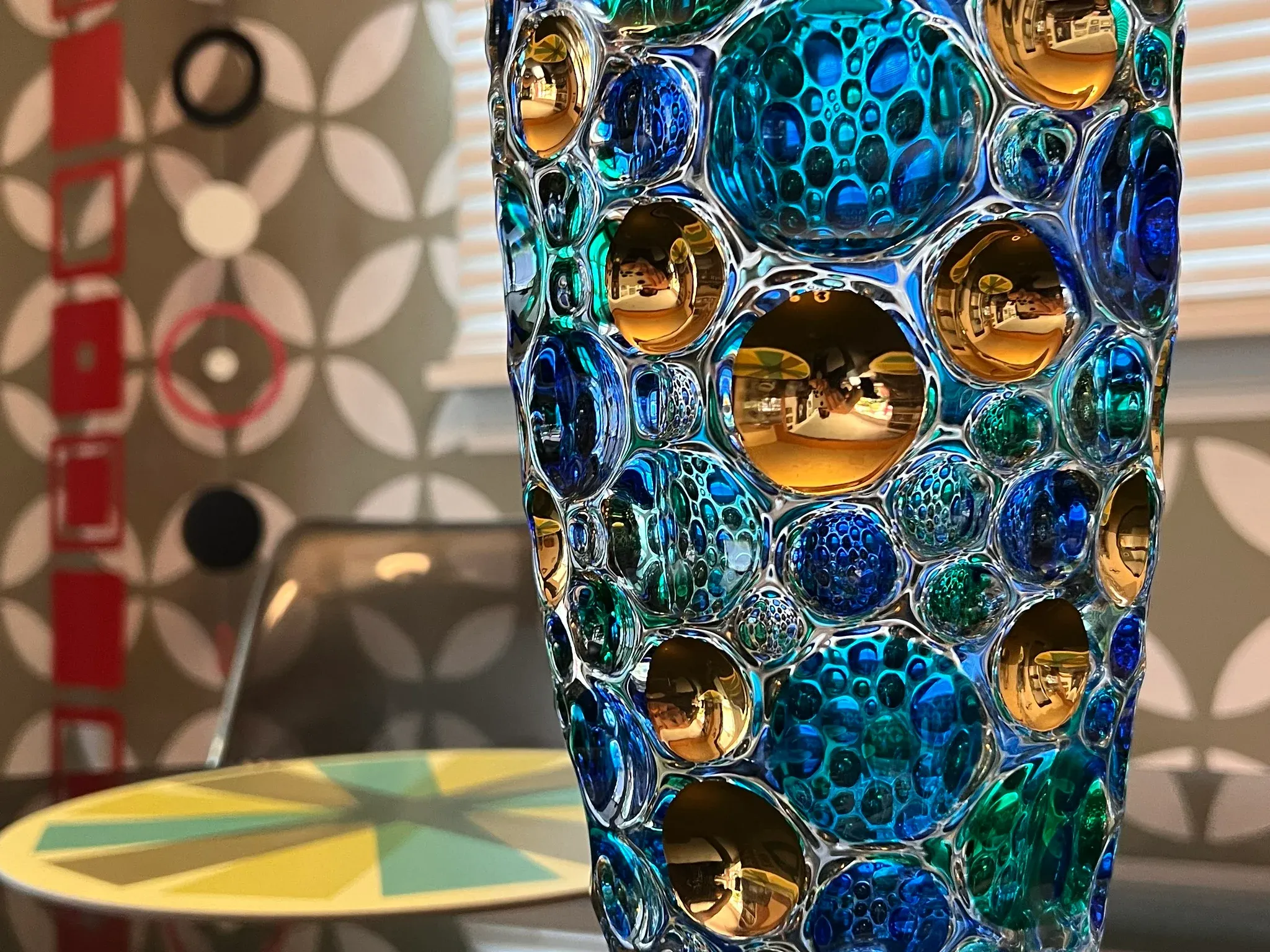
Murano didn't invent glass, but it did refine it into a brand — a system of skill, secrecy, and style recognized from royal courts to modern design fairs.
Origins: why Murano?
- In 1291, Venice moved furnaces to Murano for fire safety and control. Concentration bred specialization.
- A guild system regulated recipes, wages, and the movement of masters (who were famously hard to “export”).
- Access to trade routes brought ideas and ingredients; the lagoon brought isolation when needed.
The breakthroughs
- Cristallo: Exceptionally clear glass — Venice’s answer to rock crystal.
- Filigrana (latticino): Clear glass caged with milk‑white (or colored) canes, stretched into lace‑like forms.
- Murrine (millefiori): Patterns built in cross‑section, sliced, and fused into vessels — like making images in candy.
- Avventurina: Copper crystals suspended in glass, a glittering “accident” turned signature.
- Smalto and enamel: Color painted on glass and fixed by fire.
- Mirrors: From the 16th century, plate mirrors became a Venetian obsession and export.
How techniques work (the short version)
- Cane work: Long rods of colored glass pulled, then bundled and re‑pulled for stripes or lattices.
- Hot assembly: Elements (handles, feet, decorative leaves) sculpted and applied at the bench.
- Cold work: Grinding, engraving, and polishing after cooling control the final optics.
- Annealing: Slow cooling in the lehr prevents stress — the invisible step that saves masterpieces from cracking.
19th–20th centuries: reinvention
With industrial glass rising elsewhere, Murano doubled down on artistic value. Firms like Barovier & Toso and Venini pushed modern aesthetics, and designers (like Carlo Scarpa) treated glass as architecture in miniature.
Today: continuity and change
- Masters still train through long apprenticeships; family firms remain anchors.
- Energy costs and environmental rules challenge the furnace model — but innovation in electric furnaces and batch cycles keeps the flame alive.
How to read a piece
Look for the story of its making: the line where the punty released, a twist that tells of canes, a tiny seed of copper catching light. Murano glass is technique made visible.
Om författaren

Murano Glass Insider
Jag satte ihop den här guiden för att din dag på Murano och Burano ska bli enkel och fin — med praktiska lokala tips.
Tags
Comments (0)
Loading comments...