Murano Glass History & Techniques - Cristallo, Millefiori, Filigrana
Understand Murano glass: its guild history, guarded recipes, and the techniques — cristallo, filigrana, murrine, avventurina — that shaped Venetian style.
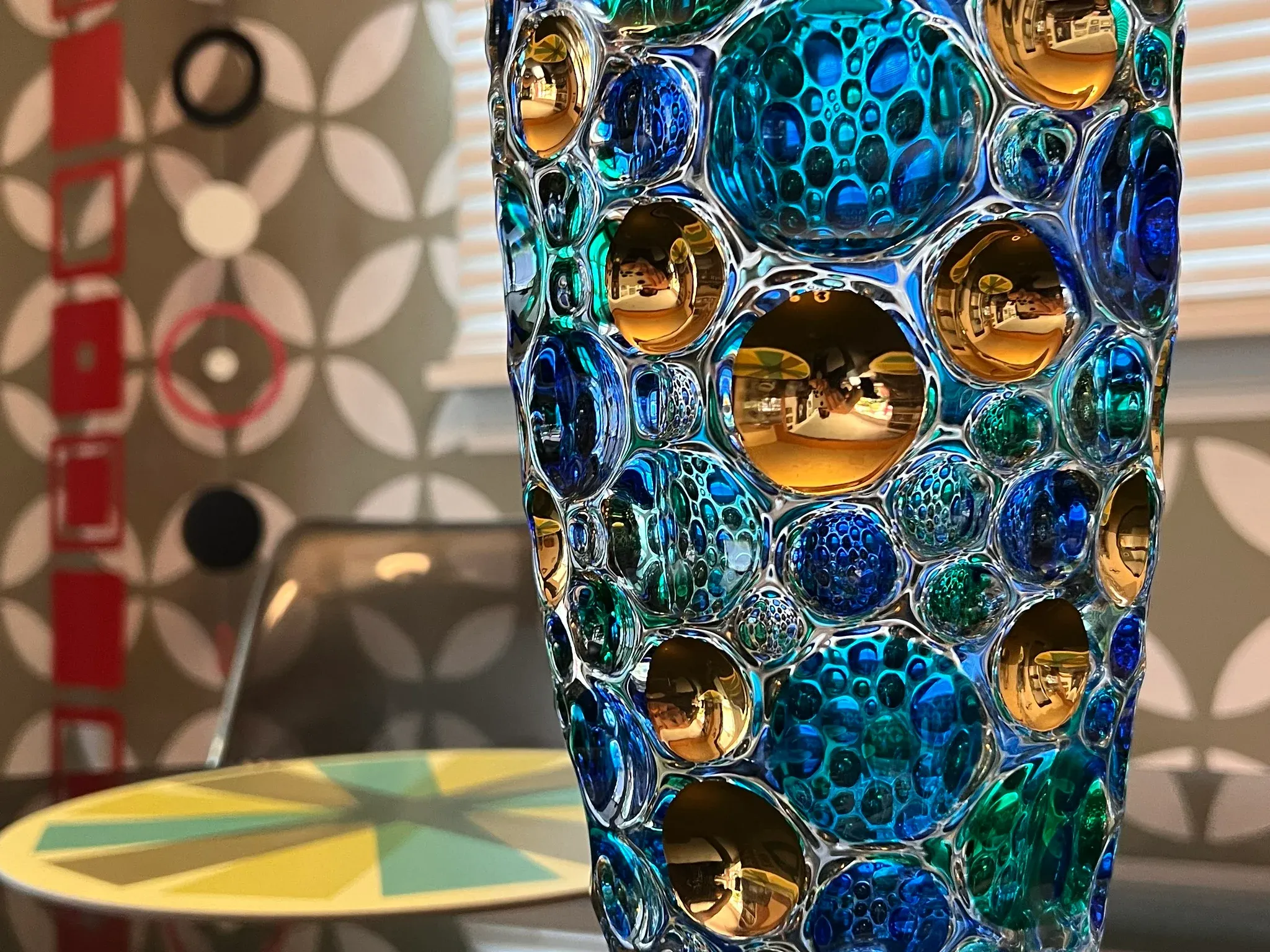
Murano didn't invent glass, but it did refine it into a brand — a system of skill, secrecy, and style recognized from royal courts to modern design fairs.
Origins: why Murano?
- In 1291, Venice moved furnaces to Murano for fire safety and control. Concentration bred specialization.
- A guild system regulated recipes, wages, and the movement of masters (who were famously hard to “export”).
- Access to trade routes brought ideas and ingredients; the lagoon brought isolation when needed.
The breakthroughs
- Cristallo: Exceptionally clear glass — Venice’s answer to rock crystal.
- Filigrana (latticino): Clear glass caged with milk‑white (or colored) canes, stretched into lace‑like forms.
- Murrine (millefiori): Patterns built in cross‑section, sliced, and fused into vessels — like making images in candy.
- Avventurina: Copper crystals suspended in glass, a glittering “accident” turned signature.
- Smalto and enamel: Color painted on glass and fixed by fire.
- Mirrors: From the 16th century, plate mirrors became a Venetian obsession and export.
How techniques work (the short version)
- Cane work: Long rods of colored glass pulled, then bundled and re‑pulled for stripes or lattices.
- Hot assembly: Elements (handles, feet, decorative leaves) sculpted and applied at the bench.
- Cold work: Grinding, engraving, and polishing after cooling control the final optics.
- Annealing: Slow cooling in the lehr prevents stress — the invisible step that saves masterpieces from cracking.
19th–20th centuries: reinvention
With industrial glass rising elsewhere, Murano doubled down on artistic value. Firms like Barovier & Toso and Venini pushed modern aesthetics, and designers (like Carlo Scarpa) treated glass as architecture in miniature.
Today: continuity and change
- Masters still train through long apprenticeships; family firms remain anchors.
- Energy costs and environmental rules challenge the furnace model — but innovation in electric furnaces and batch cycles keeps the flame alive.
How to read a piece
Look for the story of its making: the line where the punty released, a twist that tells of canes, a tiny seed of copper catching light. Murano glass is technique made visible.
About the Author

Murano Glass Insider
I put this guide together to make your Murano & Burano day simple, insightful, and full of local tips.
Tags
Comments (0)
Loading comments...